What Is the Best India Tour for First-Time Visitors?
India is one of those destinations that can feel impossible to summarize in a single trip. The country stretches across different landscapes, languages, religions, cuisines, traditions, and historical periods, so first-time visitors often face the same question: Where should I go first? The answer depends on how much time you have and what kind of experience you want, but for most travelers, the best introduction is a carefully planned journey through northern India. The classic route covering Delhi, Agra, and Jaipur, commonly known as the Golden Triangle, offers an excellent combination of history, architecture, culture, food, shopping, and everyday Indian life without requiring an exhausting number of domestic flights. It gives you the chance to see famous landmarks while still leaving room to discover the character of each destination.
For someone visiting India for the first time, the goal should not be to see as many cities as possible. India is simply too large for that approach to work comfortably. Instead, choose a route that lets you experience several sides of the country while keeping travel times reasonable. Delhi introduces you to the energy of a huge modern capital, Agra brings you face-to-face with the breathtaking Taj Mahal and Mughal history, and Jaipur provides an entirely different atmosphere shaped by Rajasthan's royal heritage. If you have more time, destinations such as Udaipur, Varanasi, or Jodhpur can be added, but the Golden Triangle remains one of the easiest starting points for a first trip.
Why the Golden Triangle Is Ideal for First-Time Visitors
The Golden Triangle works because each destination offers something different. Delhi is busy, layered, and full of contrasts, with ancient monuments standing surprisingly close to modern neighborhoods, restaurants, offices, and shopping districts. Agra is more compact and strongly connected with the Mughal era, making it an ideal place to explore monumental architecture and Indian history. Jaipur, meanwhile, introduces visitors to Rajasthan, with its grand forts, colorful markets, traditional crafts, palaces, and distinctive pink-toned architecture.
A good India Tour built around these three cities can also be adjusted to suit different travel styles. Luxury travelers can stay in historic palace hotels and enjoy private guides, while budget-conscious travelers can use comfortable hotels and trains or private cars between major destinations. Families can slow the itinerary down and prioritize attractions that are easier to explore, while couples might add romantic experiences such as a sunrise visit to the Taj Mahal or a stay at a heritage property in Rajasthan. The route is flexible enough to accommodate all of these approaches.
Start Your Journey in Delhi
Delhi is often the first stop, and it can be a little intimidating when you arrive. The traffic, crowds, sounds, smells, and sheer scale can make the city feel like an assault on the senses during your first few hours. Give yourself time to adjust rather than immediately trying to visit ten attractions. Once you settle in, Delhi becomes much easier to appreciate because it contains centuries of history alongside one of India's most dynamic modern cultures.
Old Delhi is particularly interesting for first-time visitors. The narrow streets around Chandni Chowk provide a glimpse into an older commercial world, while landmarks such as the Red Fort demonstrate the scale of Mughal architecture. Jama Masjid is another important historical site, and visitors interested in modern Indian history may want to explore Raj Ghat and other significant locations. New Delhi offers a contrasting experience, with broad avenues, government buildings, museums, upscale neighborhoods, and restaurants representing cuisines from across the country.
Food should also be part of your Delhi experience. This is a city where street food, traditional restaurants, contemporary cafés, and regional Indian cuisines coexist. First-time visitors can try dishes such as butter chicken, chole bhature, kebabs, parathas, biryani, and a variety of vegetarian specialties. If you are cautious about unfamiliar food, begin with reputable restaurants and gradually experiment as you become more comfortable.
Spend a Day or Two in Agra
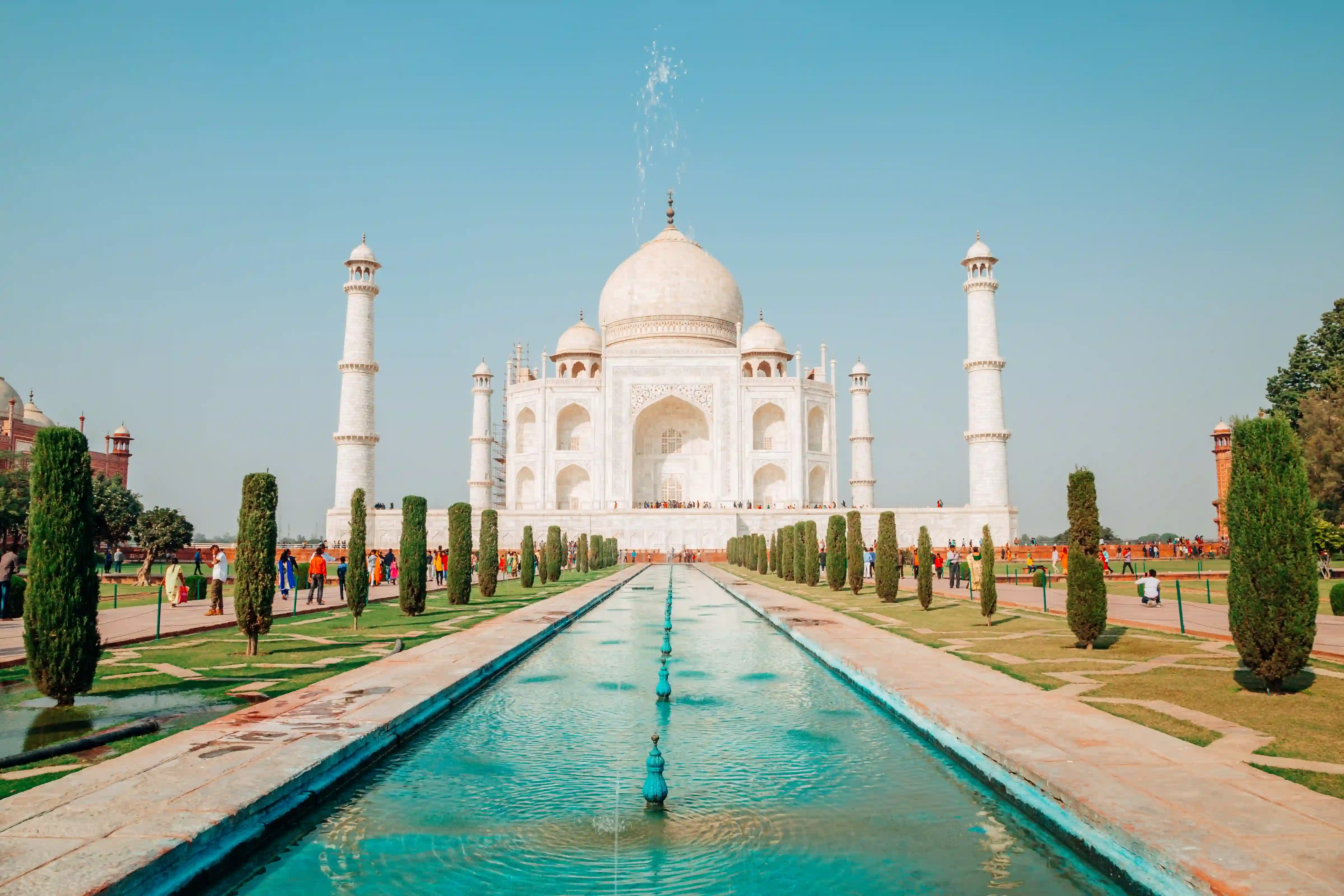
Agra is most famous for one monument: the Taj Mahal. Yet reducing the city to a single attraction would be a mistake. The Taj Mahal is unquestionably the highlight, especially when viewed in the softer light of early morning, but Agra Fort provides another fascinating perspective on the Mughal dynasty. The fort is enormous, historically significant, and filled with architectural details that help explain the world in which the Taj Mahal was created.
The Taj Mahal itself deserves patience. Instead of rushing in, take time to appreciate the symmetry, changing light, gardens, marble details, and the story behind its construction. Visiting early can make the experience more comfortable and may allow you to see the monument before the largest crowds arrive. Weather and seasonal conditions can affect visibility, so flexibility is useful.
Agra is also a good place to learn about traditional craftsmanship. Marble inlay work, textiles, leather goods, and other crafts are associated with the region, although visitors should shop carefully and avoid feeling pressured into purchases. A reputable guide can explain how traditional techniques are used and help distinguish genuine craftsmanship from mass-produced souvenirs.
Discover Jaipur and Rajasthan
Jaipur is where many first-time visitors begin to understand why Rajasthan is such a popular part of an Indian itinerary. The city combines royal architecture, colorful markets, historic neighborhoods, and a lively contemporary culture. The Amber Fort, located outside the central city, is one of the major attractions and deserves enough time for a proper visit. The City Palace, Hawa Mahal, and Jantar Mantar provide additional opportunities to explore Jaipur's history and architecture.
Jaipur is also an excellent destination for shopping. Visitors can find textiles, block-printed fabrics, jewelry, handicrafts, carpets, pottery, and traditional clothing. Bargaining is common in some markets, but it is best approached with good humor rather than aggression. If you genuinely like something and the price is reasonable for you, the experience is usually more enjoyable when the transaction feels respectful on both sides.
One of Jaipur's biggest advantages is its atmosphere. You can spend a morning visiting a fort, an afternoon exploring a market, and an evening enjoying Rajasthani cuisine or relaxing at a heritage hotel. That combination makes the city particularly attractive for travelers who want more than a sightseeing checklist.
Should You Add Varanasi?
Varanasi is one of the most spiritually significant cities in India and can be an extraordinary addition to a first trip. The city sits along the Ganges and is famous for its ghats, temples, religious ceremonies, and deep connection with Hindu traditions. For many visitors, watching the evening Ganga Aarti ceremony or taking an early-morning boat ride on the river becomes one of the most memorable experiences of their journey.
However, Varanasi is not necessarily the best destination for everyone. It can feel intense, crowded, and emotionally powerful, particularly for travelers who have never experienced a city with such a strong religious presence. If you are interested in spirituality, photography, history, and cultural observation, it may be an excellent choice. If you prefer a slower and more polished vacation, adding Udaipur or another Rajasthan destination may be more comfortable.
Consider Udaipur for a Relaxed Experience
Udaipur offers a different side of Rajasthan. Known for its lakes, palaces, hills, and romantic atmosphere, it is often chosen by couples and travelers who want to slow down after the intensity of Delhi and Agra. Lake Pichola and the City Palace are among the city's major attractions, while the surrounding landscape creates a pleasant backdrop for leisurely sightseeing.
Udaipur works particularly well toward the end of a trip. After several busy sightseeing days, you can spend more time enjoying your hotel, taking a boat ride, wandering through markets, or having a relaxed dinner with a view. It demonstrates an important lesson about traveling in India: sometimes the best memories come from doing less.
What Is the Best Time to Visit India?
India's climate varies dramatically by region, so there is no single perfect travel month for the entire country. For the Golden Triangle, the cooler months are generally more comfortable for sightseeing, while the hotter months can make extended outdoor visits difficult. The monsoon season brings substantial rainfall to many regions, although it also transforms landscapes and can offer a different travel experience.
Your destination should influence your timing. Northern cities can have very different conditions from southern coastal destinations or Himalayan regions. Before booking, check the expected climate for each city on your route rather than relying on a general statement about India's weather.
Festival periods can also make a trip particularly memorable. Diwali, Holi, and other celebrations offer extraordinary cultural experiences, but they can also mean higher demand for accommodation and transportation. Planning well in advance is sensible if your trip coincides with a major festival.
How Should You Travel Around India?
For a first visit, private transportation can make the Golden Triangle considerably easier. A private car with a professional driver gives you flexibility over stops, departure times, and sightseeing. It can also save you from navigating unfamiliar transportation systems while carrying luggage between cities.
Trains are another important part of Indian travel and can be an enjoyable experience in their own right. India's railway network connects many destinations, and different classes offer different levels of comfort. For longer journeys, selecting an appropriate class and booking in advance can make a significant difference.
Domestic flights become more useful when you add destinations that are far from the Golden Triangle. For example, flying can save considerable time if you decide to combine northern India with a distant region such as Kerala. The best transportation strategy is therefore not about choosing one method for the entire trip; it is about selecting the option that makes sense for each section of your journey.
What Should You Eat on Your First Trip?
Indian food is far more diverse than many international visitors expect. Every region has its own specialties, cooking methods, spices, breads, sweets, and vegetarian traditions. Delhi is excellent for North Indian dishes, Rajasthan has distinctive rich and hearty cuisine, and southern regions offer completely different flavors based around rice, coconut, lentils, and spices.
First-time visitors should try familiar favorites while gradually exploring less familiar dishes. Butter chicken, naan, biryani, samosas, dosa, thali, paneer dishes, and various regional curries can provide an excellent introduction. Vegetarian food is particularly easy to find, and many Indian dishes are naturally vegetarian.
Be sensible about food hygiene, especially during the first few days. Choose busy restaurants with good turnover, drink safe water, and be cautious with raw foods if you are unsure about their preparation. Your stomach needs time to adjust just as your mind does.
Where Should First-Time Visitors Stay?
Accommodation can dramatically influence your experience. In Delhi, choosing a convenient neighborhood can reduce the amount of time you spend in traffic. In Agra, staying reasonably close to the main sightseeing areas can make an early visit to the Taj Mahal easier. In Jaipur, heritage hotels can add a memorable dimension to the trip.
Your budget does not have to determine whether you have a good experience. India offers everything from hostels and simple guesthouses to boutique hotels and spectacular luxury properties. What matters most is choosing accommodation with reliable reviews, appropriate security, convenient transportation, and the services you actually need.
For many travelers, a combination works best. Spend more on a special heritage or palace hotel for one or two nights, then choose comfortable mid-range properties for the rest of the trip. That approach gives you a taste of luxury without making the entire vacation unnecessarily expensive.
Essential India Travel Tips
The most important advice for a first-time visitor is to slow down and stay flexible. India does not always operate according to the schedule you may be accustomed to at home. Traffic can be unpredictable, transportation can be delayed, and popular attractions can become crowded. Building some spare time into your itinerary will prevent a small delay from turning into a major problem.
Dress respectfully when visiting religious sites, particularly when local customs require covered shoulders, legs, or removal of shoes. Learn a few basic cultural courtesies before arriving. A simple greeting, a respectful attitude, and asking permission before photographing people can go a long way.
You should also keep digital and physical copies of important travel documents and maintain reasonable awareness of your belongings in crowded areas. Avoid displaying large amounts of cash or expensive items unnecessarily. These are not reasons to be nervous about visiting India; they are simply sensible habits for international travel.
How Much Does an India Trip Cost?
The cost of a first trip to India can vary enormously depending on your accommodation, transportation, dining choices, activities, and travel season. Budget travelers can explore India relatively affordably, while luxury travelers can spend considerably more on private guides, premium hotels, chauffeur-driven vehicles, and exclusive experiences.
The Golden Triangle is especially adaptable because you can choose among several levels of comfort. A traveler using trains and modest hotels will have a very different budget from someone traveling by private car and staying in luxury heritage properties. Rather than searching for one universal price, create a daily budget based on your preferred travel style and leave some additional money for shopping and unexpected expenses.
| Travel Style |
Typical Experience |
| Budget |
Guesthouses, local restaurants, public transportation |
| Mid-range |
Comfortable hotels, selected private transfers, guided sightseeing |
| Luxury |
Heritage hotels, private driver, personal guides, premium dining |
Common Mistakes First-Time Visitors Should Avoid
One of the biggest mistakes is trying to cover too much ground. India looks deceptively simple on an itinerary because destinations may appear close together on a map, but traffic, airport procedures, station transfers, and sightseeing can consume much more time than expected. Four or five cities in a week may sound exciting when you book the trip, but it can become exhausting once you arrive.
Another mistake is expecting India to feel like other tourist destinations. It won't, and that's part of its appeal. The streets can be noisy, cities can be crowded, and everyday life may appear chaotic at first. Instead of constantly comparing India with home, give yourself permission to experience it on its own terms.
Finally, do not build your entire vacation around famous monuments. The Taj Mahal is spectacular, but India is much more than its landmarks. Sit in a café, take a cooking class, explore a local market, talk to your guide, watch a sunset, or simply spend an hour observing daily life. Those unscripted experiences can become the stories you remember years later.
The Best First India Itinerary
For most first-time visitors, a 10-day itinerary offers an excellent balance between sightseeing and relaxation. You could begin with three days in Delhi, travel to Agra for one or two nights, and then spend several days in Jaipur. If your schedule allows, finish with Udaipur for a slower final chapter.
A seven-day trip can focus exclusively on Delhi, Agra, and Jaipur. A 14-day vacation gives you more flexibility and makes it possible to add Varanasi, Udaipur, Jodhpur, or another destination without turning the journey into a race. The right itinerary is the one that leaves you excited rather than exhausted.
A thoughtfully planned India Tour should feel like a story that develops from one destination to the next. Delhi establishes the setting, Agra reveals the grandeur of the Mughal era, and Jaipur opens the door to Rajasthan's royal traditions. Additional destinations should be added because they complement that story, not simply because they appear on a list of famous places.
Conclusion
For most first-time visitors, the Golden Triangle remains the best introduction to India. Delhi, Agra, and Jaipur provide an impressive mixture of history, architecture, cuisine, shopping, culture, and local experiences while keeping the route relatively straightforward. If you have only one week, concentrate on these three destinations; with ten days, give yourself more breathing room or add a carefully chosen extra stop. With two weeks or more, you can explore beyond the Golden Triangle and experience another side of India.
The secret is not creating the longest possible itinerary. It is creating a journey that gives you enough time to appreciate where you are. India can be loud, colorful, surprising, challenging, beautiful, and deeply moving, sometimes all within the same afternoon. Approach the country with curiosity, patience, and an open mind, and your first visit can become the beginning of a lifelong relationship with one of the world's most fascinating travel destinations.
FAQs About Visiting India
1. Is India good for first-time international travelers?
Yes. India can be challenging because of its size, crowds, traffic, and cultural differences, but popular tourist routes have extensive accommodation, transportation, and guide options. Starting with the Golden Triangle can make the first experience easier to manage.
2. How many days are enough for a first trip to India?
Seven days can provide a useful introduction, especially if you concentrate on Delhi, Agra, and Jaipur. Ten to fourteen days is preferable if you want a more relaxed experience or would like to add destinations such as Udaipur or Varanasi.
3. Is the Golden Triangle safe for tourists?
Millions of travelers visit the region, but normal travel precautions are important. Use reputable transportation and accommodation, protect your valuables, stay aware in crowded places, and follow local advice. Solo travelers should take additional care when choosing transportation and accommodation.
4. Should I hire a private guide in India?
A knowledgeable guide can add substantial value, particularly at major historical sites. Guides can explain the context behind monuments, help with logistics, and provide insight into local culture that you might otherwise miss. You can also combine guided sightseeing with independent exploration.
5. What is the biggest mistake to avoid on a first India trip?
Trying to see too much is probably the biggest mistake. India is not a destination that rewards rushing from one landmark to another. Choose a manageable route, leave space in your schedule, and allow yourself time to experience the atmosphere of each destination.
For travelers ready to plan their journey, a well-organized India Tour can make the first experience smoother, more comfortable, and easier to personalize.
Whether you are interested in historic monuments, colorful markets, spiritual experiences, local cuisine, or luxury stays, choosing the right route is the key to making your first visit memorable. With thoughtful planning and enough time to enjoy each destination, India can offer far more than a checklist of famous attractions.
When comparing itineraries and tour options, travelers can also explore an India Tour designed around their preferred destinations, travel style, and available vacation time.
The most important thing is to arrive with realistic expectations and an open mind. India rewards curiosity, patience, and a willingness to experience something different, making a carefully planned India Tour an excellent choice for first-time visitors.