Top Tourist Places in Delhi for Foreign Travelers
Delhi, the capital city of India, is a fascinating destination where ancient history meets modern development. For foreign travelers, Delhi serves as the perfect gateway to India's rich culture, architectural wonders, diverse cuisine, and vibrant traditions. From magnificent Mughal monuments and colonial-era landmarks to bustling markets and spiritual centers, the city offers countless attractions that captivate visitors from around the world.
As one of the oldest continuously inhabited cities on Earth, Delhi has witnessed the rise and fall of numerous empires. Every corner of the city tells a story, making it an unforgettable destination for history enthusiasts, photographers, food lovers, and cultural explorers alike. Whether you're visiting India for the first time or returning to discover more of its treasures, exploring the Tourist Places in Delhi should be at the top of your travel itinerary.
This comprehensive guide highlights the most popular attractions in Delhi that every international traveler should experience.
Why Delhi Is a Must-Visit Destination for Foreign Travelers
Delhi is much more than just India's political capital. It is a city that showcases the country's incredible diversity. Here, centuries-old monuments stand alongside modern skyscrapers, traditional bazaars coexist with luxury shopping malls, and ancient customs blend seamlessly with contemporary lifestyles.
Foreign travelers often begin their Indian journey in Delhi because it provides a comprehensive introduction to the country's history, architecture, religion, cuisine, and daily life. The city's international airport, extensive transportation network, and wide range of accommodations make it easily accessible for visitors from across the globe.
What makes Delhi truly unique is its ability to offer vastly different experiences within a short distance. In a single day, you can explore a UNESCO World Heritage Site, enjoy authentic street food, visit a peaceful temple, and shop in one of Asia's busiest markets. This diversity is why the Tourist Places in Delhi continue to attract millions of visitors every year.
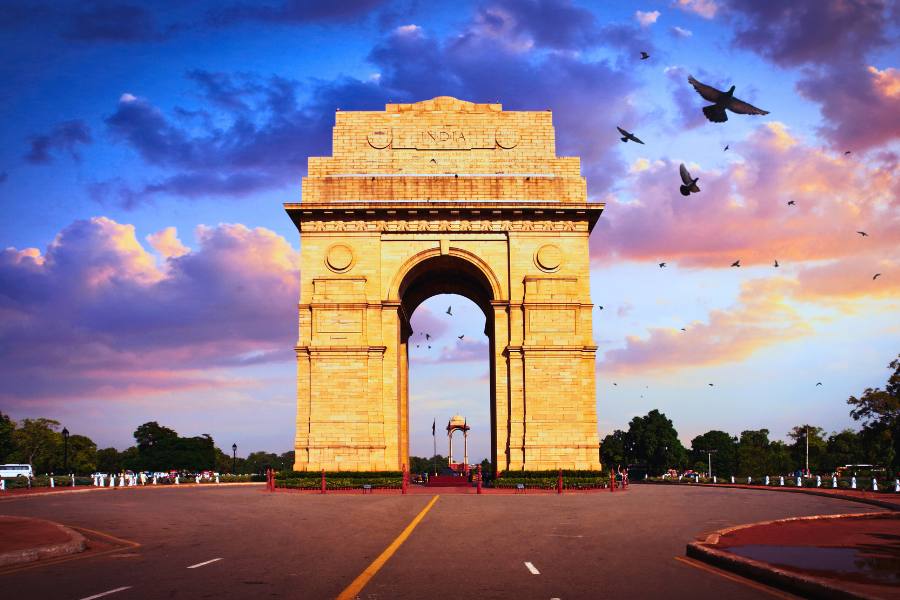
India Gate
One of Delhi's most iconic landmarks, India Gate stands proudly in the heart of the city. Built in memory of Indian soldiers who lost their lives during World War I, this impressive war memorial has become a symbol of national pride.
The monument rises approximately 42 meters high and is surrounded by beautifully maintained gardens. During the evening, the area comes alive as families, tourists, and local residents gather to enjoy the atmosphere. The illuminated structure creates a stunning visual spectacle, making it a favorite location for photographers.
Visitors can spend time walking around the monument, enjoying local snacks from nearby vendors, and learning about its historical significance. India Gate provides an excellent introduction to Delhi's blend of history and modern public life.
Red Fort
The Red Fort, known locally as Lal Qila, is one of the most significant historical monuments in India. Constructed by Mughal Emperor Shah Jahan in the 17th century, this magnificent fortress served as the primary residence of the Mughal rulers for nearly 200 years.
The massive red sandstone walls stretch over two kilometers and enclose a complex of palaces, audience halls, gardens, and mosques. As visitors enter through the grand gates, they are transported back to an era of royal splendor and imperial power.
The Red Fort has been designated as a UNESCO World Heritage Site due to its immense historical and architectural value. Every year on India's Independence Day, the Prime Minister addresses the nation from this iconic monument. Among all the Tourist Places in Delhi, the Red Fort offers one of the most comprehensive insights into India's Mughal history.
Qutub Minar
Qutub Minar is one of Delhi's most visited attractions and an architectural masterpiece that continues to impress travelers centuries after its construction. Standing at approximately 73 meters, it is one of the tallest brick minarets in the world.
Built in the early 13th century, Qutub Minar features intricate carvings, Arabic inscriptions, and remarkable craftsmanship. The surrounding archaeological complex includes several historical structures, such as the Quwwat-ul-Islam Mosque and the famous Iron Pillar, which has resisted corrosion for over 1,600 years.
The monument's elegant design and historical importance make it a favorite among international visitors. Photography enthusiasts particularly appreciate the dramatic architecture and beautiful gardens that surround the site.
Humayun's Tomb
Humayun's Tomb is often described as the architectural predecessor of the Taj Mahal. Built in the 16th century, this magnificent mausoleum was commissioned by Emperor Humayun's widow and represents one of the earliest examples of Mughal garden-tomb architecture in India.
The monument's symmetrical design, grand domes, red sandstone structures, and lush gardens create a peaceful and visually stunning environment. Walking through the complex allows visitors to appreciate the sophistication of Mughal architecture and landscaping.
Recognized as a UNESCO World Heritage Site, Humayun's Tomb remains one of the most beautiful Tourist Places in Delhi. Many travelers consider it a hidden gem compared to more crowded attractions, making it an ideal destination for those seeking a quieter historical experience.
Jama Masjid
Jama Masjid is one of the largest and most impressive mosques in India. Constructed by Shah Jahan between 1650 and 1656, it can accommodate thousands of worshippers at a time.
The mosque features massive courtyards, elegant domes, towering minarets, and intricate marble work. Visitors can climb one of the minarets to enjoy panoramic views of Old Delhi, offering a unique perspective of the city's historic neighborhoods.
The atmosphere around Jama Masjid is equally fascinating. The surrounding streets are filled with markets, food stalls, and traditional shops that provide a glimpse into Delhi's vibrant cultural life. For foreign travelers interested in religion, architecture, and local culture, Jama Masjid is an essential stop.
Lotus Temple
The Lotus Temple is one of Delhi's most distinctive modern landmarks. Completed in 1986, the temple is shaped like a blooming lotus flower and serves as a Baháʼí House of Worship.
Unlike many religious sites, the Lotus Temple welcomes people of all faiths and backgrounds. Visitors are encouraged to sit quietly inside the prayer hall and reflect in a peaceful environment free from rituals or ceremonies.
The striking architecture has earned numerous international awards and attracts millions of visitors annually. Its unique design and message of unity make it one of the most popular Tourist Places in Delhi for foreign tourists seeking tranquility and inspiration.
Akshardham Temple
Akshardham Temple is one of the largest Hindu temple complexes in the world. Known for its breathtaking architecture, intricate carvings, and spiritual significance, the temple offers visitors a remarkable cultural experience.
The main monument features thousands of handcrafted sculptures depicting deities, saints, animals, and traditional Indian motifs. Beyond the temple itself, the complex includes exhibitions, cultural presentations, musical fountains, and beautifully landscaped gardens.
Foreign travelers often spend several hours exploring Akshardham because of its size and the variety of experiences available. The temple provides valuable insights into Indian spirituality, history, and artistic traditions.
Chandni Chowk
No visit to Delhi is complete without experiencing the energy and excitement of Chandni Chowk. Established in the 17th century, this historic market remains one of the busiest commercial areas in India.
The narrow lanes are packed with shops selling textiles, jewelry, spices, electronics, and traditional handicrafts. The market also offers some of Delhi's most famous street food, including parathas, chaat, jalebi, and kebabs.
Exploring Chandni Chowk can feel overwhelming at first, but it provides an authentic glimpse into everyday life in Delhi. For many foreign visitors, the sensory experience of the market becomes one of the most memorable parts of their trip.
Raj Ghat
Raj Ghat is a memorial dedicated to Mahatma Gandhi, the leader of India's independence movement. Located on the banks of the Yamuna River, the site marks the location where Gandhi was cremated following his assassination in 1948.
The memorial consists of a simple black marble platform surrounded by peaceful gardens. An eternal flame burns continuously as a tribute to Gandhi's enduring legacy.
Visitors from around the world come to Raj Ghat to pay their respects and learn more about one of history's most influential figures. The site's serene atmosphere encourages reflection and contemplation.
Lodhi Garden
Lodhi Garden offers a refreshing escape from Delhi's busy streets. Spread across more than 90 acres, this beautiful park combines natural beauty with historical architecture.
The garden contains several tombs and monuments dating back to the 15th and 16th centuries. Joggers, photographers, families, and tourists all gather here to enjoy the peaceful surroundings.
The combination of greenery, historic structures, and open spaces makes Lodhi Garden one of the most relaxing Tourist Places in Delhi. It provides an excellent opportunity to unwind while still appreciating the city's rich heritage.
National Museum
The National Museum houses one of the largest collections of historical artifacts in India. Its extensive exhibits cover thousands of years of Indian civilization, including ancient sculptures, paintings, manuscripts, textiles, and archaeological discoveries.
Visitors can explore galleries dedicated to the Indus Valley Civilization, Buddhist art, Mughal treasures, and tribal cultures. The museum offers valuable context for understanding India's diverse history and cultural development.
For travelers interested in learning about the country's past, the National Museum is an essential destination.
Connaught Place
Connaught Place, often referred to as CP, serves as one of Delhi's main commercial and entertainment hubs. Built during the British colonial period, its circular design and elegant architecture remain distinctive features of the city.
The area offers a wide range of restaurants, cafés, shops, bookstores, and cultural venues. Visitors can enjoy everything from traditional Indian cuisine to international dining experiences.
Connaught Place is also a great place to experience modern urban India while remaining close to many of the city's major attractions.
Best Time to Visit Delhi
The ideal time to explore Delhi is between October and March. During these months, temperatures are pleasant, making sightseeing more comfortable.
Winter (October to March)
- Pleasant weather
- Ideal for outdoor activities
- Peak tourist season
- Numerous festivals and events
Summer (April to June)
- High temperatures
- Fewer tourists
- Lower hotel prices
Monsoon (July to September)
- Occasional rainfall
- Lush greenery
- Moderate tourist crowds
Most foreign travelers prefer winter because it allows them to comfortably explore the city's many attractions.
Travel Tips for Foreign Visitors
- Wear comfortable walking shoes.
- Carry bottled water.
- Use licensed taxis or ride-sharing services.
- Respect local customs and dress modestly at religious sites.
- Keep valuables secure in crowded areas.
- Try local cuisine from reputable vendors.
- Start sightseeing early to avoid heavy traffic and crowds.
These simple precautions can help ensure a safe and enjoyable trip.
Conclusion
Delhi is a city unlike any other. Its remarkable blend of ancient history, cultural diversity, architectural brilliance, and modern energy creates an experience that captivates travelers from around the world. Whether you're exploring Mughal monuments, wandering through bustling markets, relaxing in peaceful gardens, or discovering spiritual landmarks, every corner of the city offers something unique.
The wide variety of Tourist Places in Delhi ensures that visitors with different interests can all find meaningful experiences. From the majestic Red Fort and Qutub Minar to the serene Lotus Temple and vibrant Chandni Chowk, Delhi showcases the very best of India's heritage and contemporary life.
For foreign travelers seeking an unforgettable introduction to India, Delhi remains one of the country's most rewarding destinations.
FAQs
1. What is the most famous tourist attraction in Delhi?
The Red Fort, India Gate, and Qutub Minar are among the most famous attractions in Delhi.
2. How many days are enough to explore Delhi?
Three to five days are generally sufficient to visit the major attractions and experience the city's culture.
3. Is Delhi safe for foreign tourists?
Delhi is a popular international destination. Travelers should follow standard safety precautions, especially in crowded areas.
4. What is the best month to visit Delhi?
November through February offers the most pleasant weather for sightseeing.
5. Are the Tourist Places in Delhi suitable for families?
Yes, most attractions are family-friendly and offer educational, cultural, and recreational experiences for visitors of all ages.