How Many Days Do You Need for the Golden Triangle India Tour?
The Golden Triangle is one of the most popular travel routes in India, connecting three iconic destinations: Delhi, Agra, and Jaipur. For first-time visitors, it offers an exciting introduction to India's history, architecture, culture, cuisine, markets, and everyday life without requiring a complicated itinerary. But one question comes up again and again when travelers begin planning: How many days do you actually need for the Golden Triangle? The short answer is that five to seven days can cover the essential highlights, while eight to ten days gives you a much more relaxed experience. If you have two weeks, you can add destinations such as Udaipur, Varanasi, or Ranthambore and turn a classic route into a deeper exploration of northern India.
Choosing the right length is important because India is not a destination where rushing always works in your favor. Delhi alone can easily occupy two or three days, while Agra deserves more than a quick stop at the Taj Mahal if you want to understand its Mughal heritage. Jaipur is equally rewarding, with impressive forts, palaces, markets, traditional crafts, and distinctive Rajasthani culture. A well-planned Golden Triangle India Tour should therefore give you enough time to see the major attractions while leaving breathing room for meals, shopping, traffic, unexpected discoveries, and simple moments of enjoying the atmosphere.
What Is the Golden Triangle?
The Golden Triangle refers to the popular tourist circuit linking Delhi, Agra, and Jaipur. The three cities form a rough triangle on a map, with Delhi generally serving as the arrival and departure point for international travelers. Agra is famous worldwide for the Taj Mahal and its Mughal heritage, while Jaipur introduces visitors to the royal history and colorful culture of Rajasthan.
The route is popular for good reason. Each destination feels noticeably different, yet they fit together naturally as one journey. Delhi offers layers of ancient and modern history, Agra showcases monumental Mughal architecture, and Jaipur brings forts, palaces, bazaars, textiles, jewelry, and Rajasthani traditions into the picture. Rather than seeing the same type of attraction repeatedly, you experience three distinct sides of northern India.
Another advantage is flexibility. The route can be completed using trains, private cars, organized tours, or combinations of different transportation methods. That makes it suitable for backpackers, families, couples, luxury travelers, photographers, history enthusiasts, and people visiting India for the first time.
How Many Days Are Enough for the Golden Triangle?
For a basic introduction, five days is possible, but it will be fairly fast-paced. Seven days is a better minimum for most travelers because it allows you to spend meaningful time in each destination. If you have eight to ten days, you can slow down considerably and include additional experiences without feeling as though you are constantly packing and unpacking.
| Trip Length |
Best For |
Suggested Route |
| 5 days |
Fast introduction |
Delhi – Agra – Jaipur |
| 6–7 days |
First-time visitors |
Delhi – Agra – Jaipur with more sightseeing |
| 8–10 days |
Relaxed exploration |
Delhi – Agra – Jaipur with extra experiences |
| 11–14 days |
Deeper journey |
Golden Triangle plus Udaipur, Ranthambore, or Varanasi |
There is no single perfect answer because travelers have different priorities. Someone who mainly wants to see the Taj Mahal and major forts may be happy with six days. Someone interested in food, photography, shopping, architecture, and local experiences could easily spend ten days on the same route.
Is 3 Days Enough for the Golden Triangle?
Three days is generally too short for a comfortable Golden Triangle vacation. You could technically visit Delhi, Agra, and Jaipur in three days, but you would spend a large portion of your time traveling and would have little opportunity to explore each destination properly. Such an itinerary might work as a brief stopover, but it is not ideal for someone making a special trip to India.
The problem becomes especially obvious in Delhi. The city contains enough historical sites, markets, museums, neighborhoods, and restaurants to fill several days. If you arrive in Delhi and immediately leave for Agra the following morning, you may see the Taj Mahal but miss much of the capital's character.
Three days can therefore work only if your expectations are extremely limited. If you have a choice, add at least two more days. Those extra days can transform the experience from a rushed collection of photographs into a genuine introduction to northern India.
The Ideal 5-Day Golden Triangle Itinerary
A five-day itinerary is best for travelers with limited vacation time who still want to see the major highlights. You could spend two days in Delhi, one day in Agra, and two days in Jaipur. This gives you enough time for the most famous attractions, although you will still need to keep the schedule organized.
Begin in Delhi by exploring major historical landmarks and experiencing the contrast between Old and New Delhi. Depending on your interests, you might visit the Red Fort, Jama Masjid, Humayun's Tomb, India Gate, or other significant attractions. Give yourself time to enjoy at least one proper Indian meal rather than treating the city purely as a transit point.
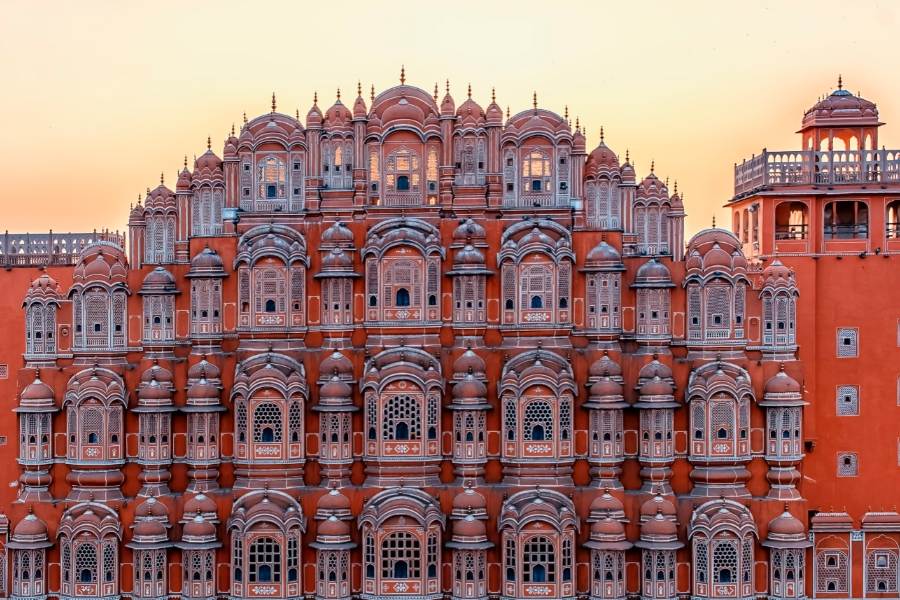
Travel to Agra next. The Taj Mahal is the obvious highlight, but Agra Fort is also worth visiting. From Agra, continue toward Jaipur, where you can explore the Amber Fort, City Palace, Hawa Mahal, and local markets.
Five days will feel busy, but it provides a practical introduction for travelers who cannot take a longer vacation.
The Ideal 7-Day Golden Triangle Itinerary
For many first-time visitors, seven days is the sweet spot. It provides enough time to see the major landmarks without making the entire journey feel like a race.
You could spend three days in Delhi, one day in Agra, and three days in Jaipur. Another option is two days in Delhi, one night in Agra, and three days in Jaipur, with additional time allocated according to your interests.
Delhi deserves at least two full sightseeing days if you want to experience both Old Delhi and New Delhi. Agra can usually be explored comfortably over one full day, particularly if you arrive early and visit the Taj Mahal around sunrise. Jaipur benefits from two or three days because attractions such as Amber Fort are outside the central city and deserve enough time for proper exploration.
A seven-day Golden Triangle India Tour also allows you to slow down during meals, browse markets, and take breaks when India's heat or crowds become tiring.
The Ideal 10-Day Golden Triangle Itinerary
If you can take ten days, you have considerably more freedom. Instead of rushing between attractions, you can create a balanced itinerary that includes cultural experiences, local food, shopping, and downtime.
A possible structure would be three days in Delhi, two days in Agra, and four days in Jaipur, with the remaining time used for transfers or an additional nearby experience. You could also add a short stop in another destination depending on your interests.
Ten days are particularly useful for families and older travelers because the pace can be gentler. You can spend a morning sightseeing, return to your hotel during the hottest part of the day, and go out again in the evening. Couples can use the additional time for romantic dinners, heritage hotels, photography sessions, or relaxed market visits.
The longer itinerary also gives you a chance to experience India beyond famous monuments. A cooking class, handicraft workshop, guided neighborhood walk, or traditional cultural performance can become one of the most memorable parts of the trip.
How Long Should You Stay in Delhi?
Delhi deserves two to three days for most first-time visitors. The capital can feel enormous when you first arrive, but giving yourself enough time to adjust makes the city much easier to appreciate.
Old Delhi offers narrow lanes, historic mosques, bazaars, street food, and Mughal-era architecture. Chandni Chowk is particularly lively and can be overwhelming in the best possible way. New Delhi provides a contrasting atmosphere with broad avenues, government buildings, museums, modern restaurants, and upscale shopping areas.
If you have only five days for the entire route, two days in Delhi may be enough. With seven or more days, three days gives you more flexibility.
Don't try to visit every landmark. Choose attractions that match your interests and leave some room for simply experiencing the city.
How Many Days Do You Need in Agra?
For most visitors, one full day and one night in Agra are enough to see the main attractions. The Taj Mahal is the primary reason people come, but Agra Fort should also be included because it provides important context for understanding Mughal history.
Staying overnight can be worthwhile because it allows you to visit the Taj Mahal early in the morning rather than arriving after a long journey from Delhi. Sunrise can create beautiful conditions for photography, although exact conditions vary with weather and season.
If you are particularly interested in architecture, history, or photography, consider spending two nights. You can explore the major monuments at a slower pace and visit local craft areas without feeling rushed.
How Many Days Do You Need in Jaipur?
Jaipur deserves two to three days for a first visit. The city is larger and more varied than some travelers expect, and several major attractions require time to reach.
Amber Fort should be high on your list, while the City Palace, Hawa Mahal, and Jantar Mantar provide additional insight into Jaipur's royal and scientific heritage. The city's markets are also worth exploring, particularly if you enjoy textiles, jewelry, handicrafts, and traditional clothing.
Three days is ideal if you want to combine sightseeing with relaxation. You can visit the forts and palaces during the day, shop in the afternoon, and enjoy Rajasthani cuisine or a heritage hotel in the evening.
Should You Add Udaipur?
If you have more than seven days, Udaipur is one of the best additions to a Golden Triangle itinerary. Known for its lakes, palaces, and romantic atmosphere, it offers a slower pace after the busy streets of Delhi and the major monuments of Agra and Jaipur.
Two or three days in Udaipur can provide a refreshing change. Lake Pichola, the City Palace, historic streets, markets, and surrounding viewpoints offer plenty to explore without requiring an exhausting schedule.
Udaipur is particularly appealing to couples, photographers, and travelers who enjoy architecture and scenic environments. It can also work well at the end of a longer trip because its relaxed atmosphere makes it easier to unwind before flying home.
Should You Add Ranthambore?
Wildlife enthusiasts may prefer adding Ranthambore National Park. The park is particularly known for its tiger population, although wildlife sightings are never guaranteed.
A safari can add an entirely different dimension to your trip. Instead of spending another day visiting monuments, you can explore a natural landscape and look for wildlife with trained guides and drivers.
If you have ten to fourteen days, Ranthambore can fit naturally between Jaipur and another Rajasthan destination. The exact logistics depend on your transportation and travel dates, so allow enough time rather than treating the safari as a quick side trip.
Should You Add Varanasi?
Varanasi is another possible extension, but it changes the character of the journey. The city is one of India's most important spiritual centers and is famous for its ghats along the Ganges, religious ceremonies, temples, and distinctive atmosphere.
First-time visitors often find Varanasi fascinating but intense. It is not necessarily a place where you simply tick off attractions and move on. An early-morning boat ride and an evening Ganga Aarti ceremony can provide powerful cultural experiences.
If spirituality and cultural immersion are important to you, adding Varanasi may be worthwhile. If your preference is for relaxed sightseeing, Rajasthan destinations such as Udaipur may be a better fit.
What Is the Best Time for a Golden Triangle Trip?
The best time depends on your tolerance for heat, your preferred activities, and the specific experience you want. The cooler part of the year is generally more comfortable for sightseeing in Delhi, Agra, and Jaipur, while summer can be very hot.
The monsoon season brings rain to northern India and can affect outdoor sightseeing, transportation, and photography. However, the landscape can become greener and more atmospheric, so some travelers deliberately choose this period.
Major festivals can also influence your plans. Events such as Diwali and Holi can provide unforgettable cultural experiences, but they may also increase demand for accommodation and transportation. Booking ahead is sensible if you want to travel during major celebrations.
Private Tour or Independent Travel?
Both approaches can work. Independent travelers have maximum flexibility and may enjoy using trains, local transportation, and independently booked hotels. However, navigating a large and unfamiliar country can be challenging, particularly when you are dealing with limited time.
A private tour can simplify the experience considerably. A professional driver can handle long road journeys while a local guide can explain historical sites and cultural traditions. This can be particularly valuable during a short five- or seven-day itinerary, when losing several hours to logistical problems matters.
A Golden Triangle India Tour can also be customized around your interests. You can choose comfortable hotels, luxury heritage properties, private transportation, guided sightseeing, or a mixture of independent and organized experiences.
How Much Time Should You Allow for Travel?
Travel time is one of the most overlooked parts of planning the Golden Triangle. A journey that appears short on a map can take longer than expected because of traffic, road conditions, station transfers, or delays.
This is why you should avoid filling every available hour with sightseeing. If you schedule an attraction immediately after arriving in a new city, even a small delay can disrupt the entire day.
The best itineraries treat transportation as part of the journey rather than dead time. Use longer transfers as opportunities to rest, observe the changing landscape, listen to music, read, or simply recover from sightseeing.
Tips for Planning the Perfect Golden Triangle Trip
The first rule is to avoid trying to see everything. Delhi, Agra, and Jaipur each contain far more attractions than you can comfortably visit in a single day.
The second rule is to build flexibility into your schedule. Leave space for traffic, weather, meals, shopping, and unexpected discoveries.
The third rule is to choose accommodation strategically. Staying in convenient areas can reduce unnecessary travel and give you more time to explore.
Finally, think about what you actually want from the trip. If you love history, allocate more time to monuments. If food is your priority, include culinary experiences. If photography matters, plan around sunrise and sunset rather than trying to squeeze in another attraction.
Is Seven Days Better Than Five Days?
For most travelers, yes. Five days can cover the highlights, but seven days provides a more comfortable balance.
The additional two days give you time to explore Delhi properly, slow down in Jaipur, or include a cultural experience. They also create a buffer for unexpected delays.
A seven-day itinerary is particularly appropriate for first-time visitors because it provides structure without making the journey feel overly rigid.
Is Ten Days Too Long?
Not at all. Ten days can actually be ideal if you enjoy traveling slowly.
You could use the extra time to explore lesser-known neighborhoods, take cooking classes, visit local markets, enjoy heritage hotels, or add Udaipur or Ranthambore.
The advantage of ten days is not simply seeing more places. It is having more time to experience the places you already chose.
Final Recommendation: How Many Days Should You Book?
If you are asking for one straightforward recommendation, plan for seven to ten days. Seven days is excellent for a classic Delhi–Agra–Jaipur itinerary, while ten days gives you the flexibility to slow down or add another destination.
For a five-day trip, keep the itinerary focused and expect a faster pace. For two weeks, explore beyond the traditional triangle and consider destinations such as Udaipur, Ranthambore, or Varanasi.
The perfect Golden Triangle India Tour is not necessarily the one with the most destinations. It is the one that gives you enough time to appreciate India's history, culture, food, architecture, and people without constantly watching the clock.
Conclusion
The Golden Triangle is an excellent introduction to India because it combines three remarkably different destinations into one manageable journey. Delhi provides a fascinating mixture of ancient history and modern energy, Agra showcases extraordinary Mughal architecture through landmarks such as the Taj Mahal, and Jaipur introduces travelers to the royal heritage and colorful culture of Rajasthan.
For most first-time visitors, seven days is the ideal minimum, while eight to ten days offers a more relaxed and rewarding experience. If you have additional time, adding Udaipur, Ranthambore, or Varanasi can transform a classic Golden Triangle journey into a broader exploration of northern India.
The key is to resist the temptation to cram your itinerary. India is best experienced at a pace that leaves room for discovery. Give yourself time to enjoy the food, speak with locals, explore markets, photograph historic buildings, and simply absorb the atmosphere. A thoughtfully planned Golden Triangle India Tour can become much more than a sightseeing trip—it can be your introduction to the extraordinary diversity of India.
FAQs
How many days are ideal for the Golden Triangle?
Seven to ten days is ideal for most travelers. Seven days works well for Delhi, Agra, and Jaipur, while ten days allows for a slower pace and potentially an additional destination.
Can I complete the Golden Triangle in five days?
Yes, but the itinerary will be relatively fast-paced. Five days is suitable if you primarily want to see the major attractions and have limited vacation time.
How many nights should I spend in Jaipur?
Two or three nights are recommended for most first-time visitors. Three nights give you enough time to explore the major forts, palaces, markets, and local experiences without rushing.
Is Agra worth staying overnight?
Yes. Staying overnight makes it easier to visit the Taj Mahal early in the morning and explore Agra Fort without rushing back to Delhi or continuing immediately to Jaipur.
What should I add after the Golden Triangle?
If you have extra time, Udaipur is a great choice for lakes, palaces, and relaxation. Ranthambore is ideal for wildlife enthusiasts, while Varanasi is better suited to travelers seeking a deeper spiritual and cultural experience.