Everything You Need to Know Before Visiting the Taj Mahal in 2025
The Taj Mahal
is a love story engraved in marble. This guide covers ticketing, timing, rules, photography tips, nearby attractions, and travel advice for 2025.
A Glimpse into History: The Story of the Taj Mahal
The Taj Mahal’s narrative begins with the Mughal Emperor Shah Jahan and his queen, Mumtaz Mahal. When Mumtaz passed away in 1631, Shah Jahan swore to build a monument so magnificent that the world would never forget their love. Over 22 years and with the work of 20,000 artisans, the Taj Mahal was completed in 1653.
Made completely of white marble that changes color with sunshine and moonlight, it remains a timeless emblem of devotion and Mughal creativity. The UNESCO World Heritage Site attracts more than 7 million tourists annually.
Taj Mahal in 2025 - What’s New This Year
In 2025, visiting the Taj Mahal is more frictionless, digital, and eco-friendly than ever. The Archaeological Survey of India (ASI) and Uttar Pradesh Tourism Department introduced several upgrades:
- Digital Ticketing & QR Code Access — Order online tickets and use QR codes for contactless access. Pick your time slot and get an instant e-ticket.
- Sustainability Focus — Electric shuttle buses and e-rickshaws, plastic-free zones, solar-powered lighting, water refill stations, and segregated bins.
- Smart Tourism Features — Augmented Reality (AR) displays to visualize historical scenes, audio-guided tours in multiple languages, free Wi‑Fi zones, and charging stations.
Where Is the Taj Mahal Located?
The Taj Mahal stands in Agra, Uttar Pradesh, on the southern bank of the Yamuna River. Agra is part of India’s famous Golden Triangle, which also includes Delhi and Jaipur.
How to Reach Agra
- By Train: Gatimaan Express or Shatabdi Express from Delhi — about 100 minutes.
- By Road: Drive or take a taxi via the Yamuna Expressway (approx. 3.5 hours from Delhi).
- By Air: Nearest airport: Pandit Deen Dayal Upadhyay Airport, with flights from Delhi, Mumbai, and Varanasi.
Tip: If coming from Delhi, start early morning for a same-day round trip.
Taj Mahal Timings 2025
The Taj Mahal opens 30 minutes before sunrise and closes 30 minutes before sunset — generally from 6:00 AM to 6:30 PM. It is closed every Friday for prayers at the mosque inside the complex.
Night Viewing
Experience the Taj Mahal by moonlight on five nights each lunar cycle (the full moon night and two nights before and after). Night-viewing tickets must be ordered 24 hours in advance through the ASI office in Agra.
Entry Fee for Taj Mahal 2025
Official ticket price list for 2025:
- Indian Citizens: ₹250 (Entry) + ₹200 extra for Main Mausoleum
- SAARC / BIMSTEC Countries: ₹740 + ₹200 for Main Mausoleum
- Foreign Tourists: ₹1,300 + ₹200 for Main Mausoleum
- Children (below 15 years): Free
Note: Entry tickets are valid for three hours from the moment of entry.
How to Book Taj Mahal Tickets Online
The Taj Mahal is more than an architectural masterpiece — it's a love story that continues to fascinate. Whether you’re visiting for the first time or returning, 2025’s improvements make it easier and more memorable than ever. Pack your bags, charge your camera, and get ready to fall in love with the Taj Mahal and the story it tells.
Best Time to Visit the Taj Mahal
Best Season: October to March — pleasant weather and clear skies. Avoid April–June (extreme heat) and July–September (monsoon).
Best Time of Day: Early morning (fewer visitors, sunrise views) or evening (great sunset light). Full moon night offers a unique romantic experience.
Rules & Dress Code for Visitors
There is no strict dress code, but modest clothing is appreciated. As the Taj Mahal houses a mosque, avoid revealing outfits.
- Large luggage, outside food, and tripods are not allowed.
- Photography inside the main mausoleum is prohibited.
- Maintain silence in the main dome area.
- Dispose of rubbish properly — it’s a no-plastic zone.
Exploring the Taj Mahal Complex
The complex covers 42 acres and includes:
- The Main Mausoleum: Cenotaphs of Shah Jahan and Mumtaz Mahal with exquisite marble inlay work.
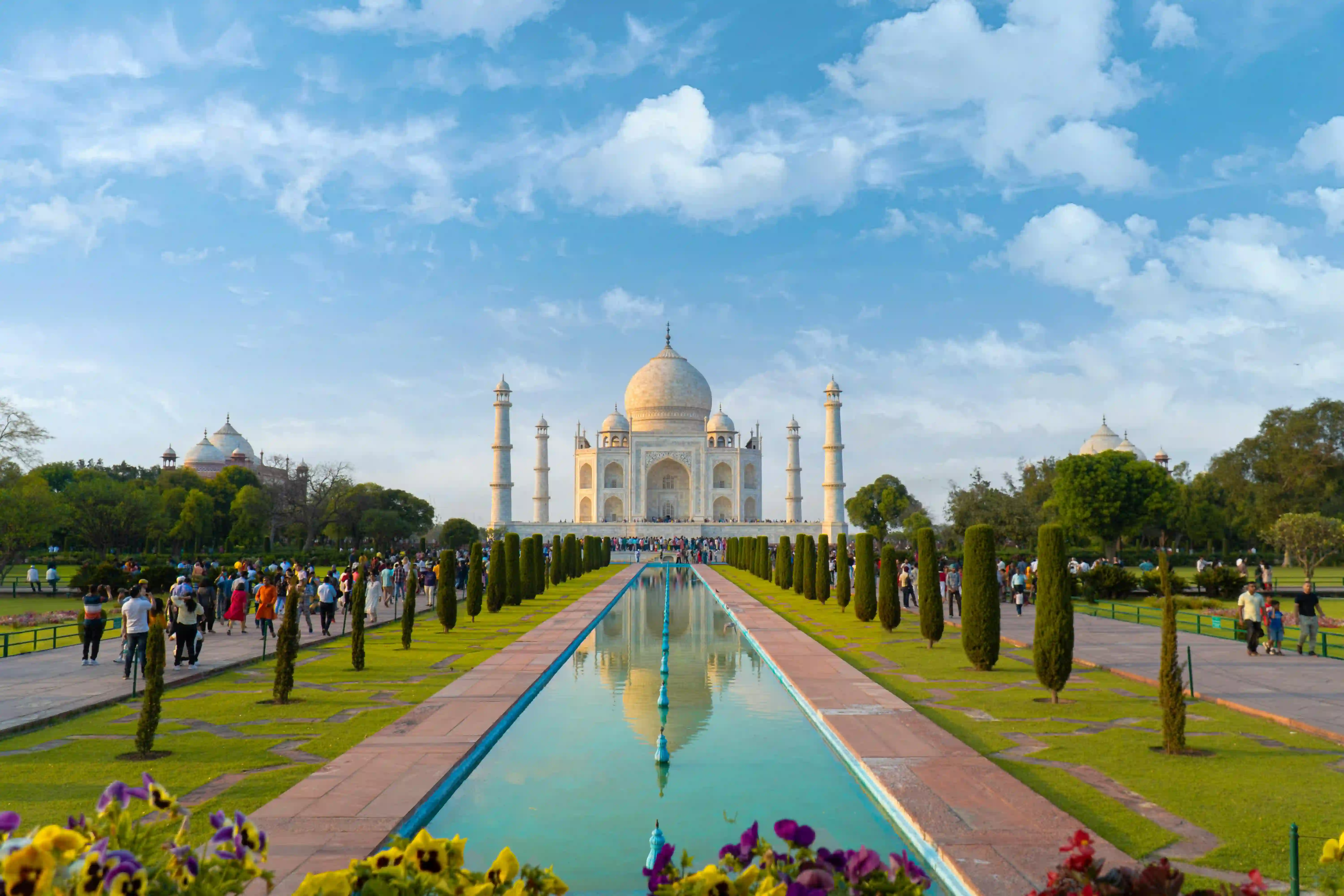
- The Gardens (Charbagh): Symmetrical Persian-style garden divided by walkways and water channels.
- The Mosque and Jawab: Red sandstone mosque (west) and the Jawab (east) for architectural balance.
- The Great Gate (Darwaza-i-Rauza): Majestic entryway adorned with Quranic inscriptions.
Best Photography Spots at the Taj Mahal
Top locations for photos:
- Main Reflecting Pool — the iconic postcard view.
- Mehtab Bagh (across the river) — magnificent sunset shots.
- Eastern Forecourt — fewer crowds and soft early light.
- Taj Viewpoint at Agra Fort — historic vantage with the Taj in the background.
Pro Tip: Best light between 6:30 AM–8:00 AM or just before sunset.
Where to Stay Near the Taj Mahal
Options for every budget:
- Luxury: The Oberoi Amarvilas, ITC Mughal
- Mid-Range: Crystal Sarovar Premiere, Courtyard by Marriott Agra
- Budget: Zostel Agra, Joey’s Hostel (rooftop Taj view)
Local Food You Must Try in Agra
Must-try dishes:
- Agra Petha — sweet made from ash gourd.
- Bedai & Jalebi — traditional breakfast combo.
- Mughlai Biryani & Korma — rich and fragrant dishes.
Recommended restaurants: Pinch of Spice, Esphahan, Sheroes Hangout Café.
Other Must-Visit Attractions in Agra
- Agra Fort — UNESCO site and former royal residence.
- Itimad-ud-Daulah’s Tomb — the “Baby Taj.”
- Fatehpur Sikri — the derelict red sandstone city of Emperor Akbar.
- Mehtab Bagh — panoramic Taj views at sunset.
Travel Tips for Your Taj Mahal Visit
- Carry ID proof for verification at admission.
- Buy tickets in advance, especially on weekends and holidays.
- Follow official guidance to avoid scams.
- Avoid Fridays — the monument is closed.
- Visit early morning to beat crowds and heat.
The Taj Mahal is more than an architectural masterpiece — it’s a love story that continues to fascinate. Whether you’re visiting for the first time or returning, 2025’s improvements make it easier and more memorable than ever. Pack your bags, charge your camera, and get ready to fall in love with the Taj Mahal and the story it tells.